Sunday, October 28, 2012

Individuals Do Matter


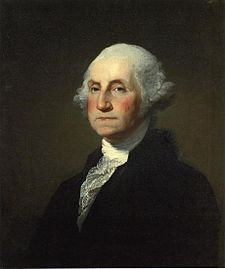
The field of History has changed before the 1970s the majority of historians wrote what we call Great Men’s History. The story of the world was told through important individuals. More Recently History has transformed into a larger subject, where those who had not previously had a voice could now speak. It is interesting that we are still having a debate of the importance of individuals when any American 7th grader can tell you American won the revolution because of George Washington or can explain the importance of Abraham Lincoln (think History Channels new series The Men Who Built America). To be honest it doesn’t matter if these people actually had a huge effect on History, because perception is reality, if we think these people are important and that Individuals matter then Individuals can make a difference.
 
Bringing this specifically to the Middle East there are several examples of Important Individuals. Sadam Hussein, Sadat, Reza Shah, Attaturk, and so many more powerful men (Golda Meir, Let’s not forget the powerful women) have helped shape the Middle East. Some of these men were from the region others have been from outside it, Sykes and Picot, and several American Presidents to name a few. However one individual has had a profound effect on the Middle East and is still affecting it today, a man so important his image can not be shown, The Prophet Muhammad, Peace be upon him. He is the greatest example of an important individual in the Middle East.


God may have found another follower but he chooses Muhammad whose actions dictate the Hadiths and inspire the salafists. Muhammad relayed the word of God and since it is God’s word in the Quran and not his own, he may not seem to be that important. But his daily life, actions and other sayings are still a large collection of work that Muslims analyzes and try to live by today. Even his sayings are interpreted and fought over. Specifically in the case of the next leader, some Muslims suggest that Muhammad and declared Ali his successor while others disagree strongly. Anyone who suggests that individuals are not important need only look at the effect Muhammad has had on the world.

Thursday, October 18, 2012

Western Sahara: History part 1


                 Along with my series on modern orientalism I will also be writing about Western Sahara. Western Sahara is an interesting place with an even more interesting history. Originally Inhabited by the Berber Speaking peoples, present day Western Sahara was been shaped a lot by Islam. Islam came across North Africa after the Arab conquest. Since the Arab expansion and empirical rule, North Africa has been a defined by the mix of Arab and Berber cultures. During one of the most interesting periods of time, the colonial period, Spain claimed Western Sahara as part of its territorial possessions.  In the north the country of Morocco later came under Spanish rule as well. Morocco had large influencing from a strong French protectorate as well. The Spanish rule of Western Sahara would change drastically during the mid-20th century, starting with Moroccan independence in the 1950s.
 
               Further loss of Spanish colonies continued in the 1970s when the Spanish began to promise a possible established independent Western Sahara. Instead the countries of Mauritania and Morocco established a joint rule over the area because of historic claims. From here the Moroccan troops invaded and now control the region. With Algeria stepping in to support independence of the Sahrawi people (the Polisaro front). After the mid-1970s a number of small diplomatic changes occur which I will emphasize later. In the future I will begin to address the idea of whether or not Western Saharans could be on a tract for statehood or if they are left behind in an old colonial system.

Thursday, October 4, 2012

Water Usage


Water Usage Diary and Interpretation

Ok so for those of you who didn’t know, the Middle East is running out of water. Turns out the stereotypical dessert region, doesn’t have a lot of water…go figure. The increase in population, agriculture and industrialization has led to an increase demand for water on the already limited resource.

I was excited to learn that my average water consumption might be lee then the American average.


And then immediately disappointed to learn I was way above the average of people living in North Africa.

 
My water foot print comes mainly from food. This is also part of the major problem in North Africa. The stereotypical desert region has been attempting to increase its food security by growing more and more food, in conjunction with its higher demands from its growing population.  


Now as a orientalists I have to say I want my Middle East dry, dry as a bone. So why bother growing food there? Yes I know food security, trade security, nationalism etc… but it’s easier to grow food elsewhere, most of the Middle East wasn’t made for that. The Middle East would save more water buying their food elsewhere. Yes it might have been the British demand for cotton that moved Egypt into a new form of cash crop agriculture but that’s the exception in North Africa. Algeria is mainly dessert and it doesn’t make sense to grow a lot of food there.


Ok besides stopping agriculture (or cash crop growth …looking at you Yemen), what else could the Middle East do to save its water resources.

Have Less People, there are two options to reduce the burden on a resource, Increase the supply or reduce the demand. If there were less people (it is a region where the population is not sustainable) then there would be less demand for the resource.

Now realistically the region needs to come together and work on solutions that would benefit the entire region. Cooperation over mutual resources, cutting back water usage, efficient growing techniques and plants (drop that Kat), and an increase in desalination plants.

Reading for Colonialists

http://www.amazon.com/White-Mans-World-Memories-Empire/dp/019929691X

Powellism is a darker side of this theory so I will probably ignore this realistic application of romanticism

Sunday, September 30, 2012

Romanticized Colonialists


To be honest I am part of the "problem". When Said and others talk about Westerners stereotyping the Middle East, he is taking about me. Of course I like the Idea of an exotic mysterious different place in the world. Who wouldn’t want to travel to a region of adventure and excitement?  Have I romanticized the region? Yes! But isn’t that part of the allure? Of course if I went to Egypt I’d want to see pyramids. I want to trade in a Berber suk, ride a camel, and have a nomadic adventure. Is there really anything wrong with that? Attitudes like this have allowed the Middle East to develop tourist attractions, to make money for their people. Hey, if you got it flaunt it! This desire for a nomadic adventure has allowed small oasis towns to develop tourist industry and become a desirable travel destination to those who watched Lawrence of Arabia and the Man Who Would Be King, one too many times. Sure we are Romanticized Colonialists, but is it really wrong to appreciate the exoticness of the Middle East? There is sense of “Otherness” the culture is different but let’s embrace it and not run from it.

All Politics Are Local


All Politics are Local


The Middle East is not only a region, but it is also a system of states. These states all have their own domestic politics. These different systems of local politics affect not only what happens internally in these countries but also in the region as a whole. The Idea that all politics are local suggest that the things that happen in one small area, close to the individuals level effect what happens on the international level.

The best way to talk about this idea is through examples

So In Lancaster County many people may not have felt the same economic changes have in other parts of the country. Because of our diverse and locally driven economy as well as a strong tourist industry our local views of the economy are very different then someone who lives in Detroit (fall of the auto industry …need I say more).
 

So maybe an individual in Lancaster may think things are not as bad as they seem and therefore think we don’t need President Obama to make things better and instead vote for Mitt Romney.


This can work in many different ways that same individual from Lancaster could make their electoral decision off of several local factors, including political parties, Lancaster has a strong local GOP so maybe they would vote for Mitt Romney because of that.


In Lancaster they do it yourself attitude is prevalent among the conservative Mennonites so maybe they would vote for the President because they think he built himself up from nothing whereas Mitt Romney was born into wealth.


The point is reason the political system shifts in different directions is because of the attitudes of individuals on the local level not on how they feel about national policy.